Best Age Verification Software Providers in 2026

Reality check 2026: businesses no longer can afford to treat age verification as a „nice-to-have” option. In the US alone, a massive wave of age verification laws has already swept over 25 states, and more are now getting ready to join. Tougher age assurance laws now mandate platforms to actively check a user’s age before granting access to adult content, alcohol/tobacco purchases, gambling/iGaming, or other age-restricted services. Failure to comply can lead to legal liability, heavy fines, and user-trust loss.
That’s why choosing the right age verification tool, that protects your business, respects users’ privacy, safeguards your reputation, and builds long-term trust, matters a lot in 2026. In this article, we’ll explore the top 7 age verification providers, and how they can keep your business compliant while protecting minors online:
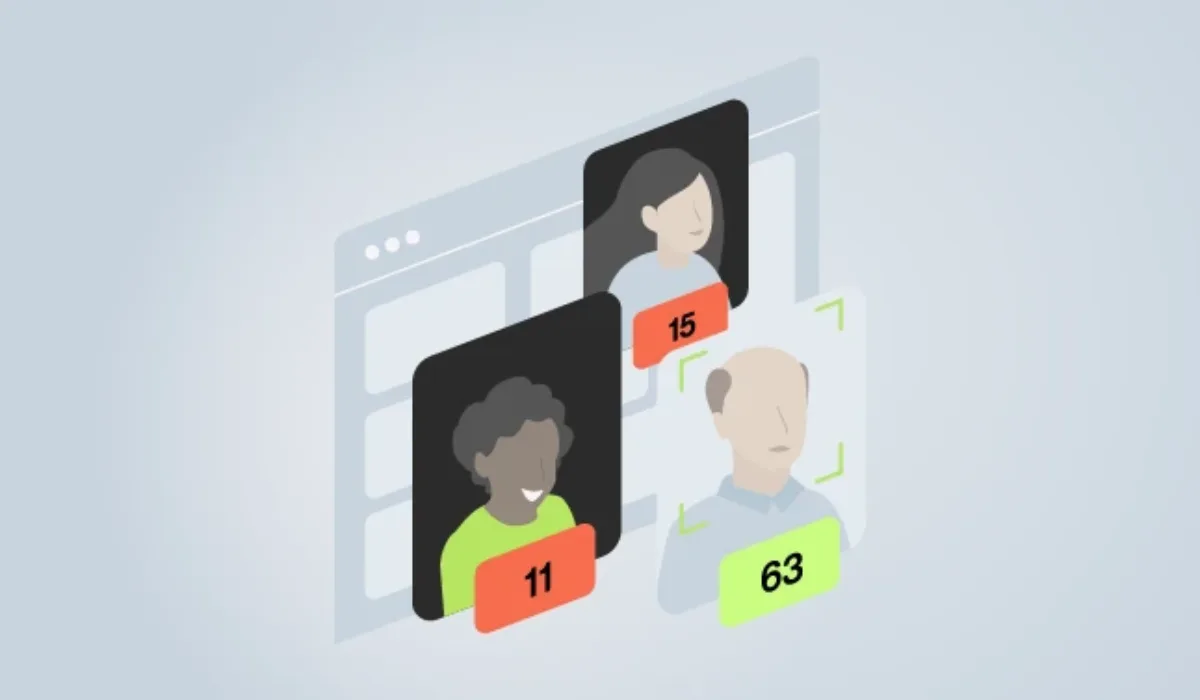
Choosing an Age Verification Tool
Finding your perfect match requires cutting through the marketing noise and solely focusing on what genuinely matters for your business model and risk profile. And there’s a lot to choose from.
The global age verification software market stood at $1.97 billion in 2024, $2.22 billion in 2025, and is expected to reach $5 billion by 2033. Source
But different industries face different regulations. What works for an online gaming site or an online casino may not suit an eCommerce store selling wine or vapes. So, it’s only logical to start by clarifying which laws apply to your business across all jurisdictions where you operate, and only then prioritize vendors with proven track records in your sector.
Here’s how businesses could approach the selection process – by using this mini checklist to evaluate vendors:
| STEP | ACTION |
| Define your use case | Are you selling physical age-restricted goods, like alcohol, tobacco, vaping, or offering adult content, or running a social media / gaming platform? |
| Check verification methods | The best platforms offer multiple verification pathways, including identity document scanning, facial age estimation, database cross-checks, multi-step verification, and digital ID wallets. Different user segments may prefer different methods. |
| Review the tool’s integration with your technology stack | Does the solution integrate with your existing infrastructure, or will implementation require extensive custom development? Look for robust API documentation and case studies from similar businesses. |
| Prioritize compliance over convenience | Make sure the tool meets all legal requirements; but also test how smooth the experience is for a legitimate adult user. |
| Analyze data privacy architecture | Ensure the tool supports privacy compliance, especially if you operate in jurisdictions like the EU. How is personal data stored, encrypted, and ultimately disposed of? Solutions that minimize data retention while maintaining compliance deliver the best privacy-security balance. |
| Test for scalability and flexibility | As your business grows or expands into new regions or product categories, your age verification solution should be able to grow with you. |
| Check how false positives are managed | What happens when legitimate users get flagged incorrectly? Strong platforms provide clear appeal processes and support infrastructure to resolve edge cases quickly. |
| Pay attention to cost structure transparency | Look beyond per-verification pricing to understand setup fees, monthly minimums, and volume discounts. The cheapest option often delivers the most expensive problems. |
After you complete the checklist, request a demo or a free trial from the candidate vendors. Parallel to this, check real-life feedback and reviews from both compliance specialists and end-users. Finally, balance the cost vs risk ratio: sometimes cheap, half-baked solutions lead to compliance headaches, but over-engineered tools may annoy customers.
Evaluation Criteria for Age Verification Tools
When we compare and rank age verification solutions, we evaluate each tool against five core pillars. To accurately determine whether an age verification software is truly fit for modern age-restricted business operations, we recommend basing your verification tools’ ranking on the following evaluation criteria:
- Accuracy forms the foundation. The best platforms use AI-powered facial estimation, document scanning with OCR technology, and biometric authentication to minimize false positives while catching sophisticated fraud attempts. ADVICE: Evaluate how solutions perform against evolving counterfeit ID technology and deepfake threats.
- Automation determines scalability. Top-tier solutions process verifications in seconds without manual review, integrate seamlessly with existing systems through APIs, and handle peak traffic without degradation. ADVICE: Prioritize platforms that reduce operational overhead while maintaining verification integrity.
- Compliance support separates professionals from amateurs. Leading solutions stay current with multi-jurisdictional requirements, such as GDPR in the EU or state-specific US laws, provide audit trails and reporting capabilities, and offer clear documentation that satisfies regulatory scrutiny. ADVICE: Choose solutions that allow document upload, proof-of-age, data minimization, logging for audits, and so on.
- User experience impacts your bottom line directly. The best platforms balance security with convenience through mobile-friendly interfaces, multiple verification pathways to accommodate different user preferences, and minimal friction that doesn’t trigger cart abandonment. ADVICE: Opt for solutions that offer smooth onboarding, clear instructions, and minimal friction.
- Adaptability across industries ensures longevity. Whether you’re running an online casino, selling vape products, operating age-gated adult content platforms, or managing social media communities, the right solution flexes to meet your specific regulatory landscape and user expectations. ADVICE: Go for the solution that can easily adapt.
With these criteria in mind, you can objectively evaluate what “the best” means for you. Is it security, balance compliance, user-friendliness, or real-world practicality you’re after?
Overview: Comparing Age Verification Software
| Vendor | G2 Ranking in Age Verification | General Compliance Coverage | Age Verification Legal Standards |
| Ondato | #1 in Age Verification | All-in-one KYC/AMLcompliance platform, Biometric Authentication, Identity Verification | Compliant with global age laws: COPPA, EU DSA NIST, GDPR, CA AADCA, KJM |
| Veriff | Leader in Identity Verification | Global ID verification and AML compliance: AI-driven KYC with sanctions/PEP screening; GDPR and SOC 2 certified security | Certified by KJM for online age checks. Compliance enabled with international age-restriction laws |
| Entrust (Onfido) | #4 in Identity Verification, Avg. 4.4/5 rating | Global document and biometric identity verification with integrated fraud and AML checks | Used for age verification needs via its ID platform; no dedicated age-specific certification; covers age as part of KYC |
| Jumio | Strong presence, high security emphasis | Robust eKYC/AML suite: ID document scanning, biometric liveness, fraud detection, ensuring data security | COPPA and GDPR compliant for age checks by verifying user age with IDs |
| ID.me | 4.7/5 overall rating, but no public G2 rank in Age Verification | Government-grade digital ID provider (NIST 800-63-3 IAL2 certified); identity proofing focus (not an AML/KYC vendor) | Primarily provides general identity verification; used for secure access to governmental services; not a specialized age-gating solution for content or e-commerce |
| VerifyMyAge | Listed among alternatives to Entrust, Sumsub; 4.1/5 rating | Age checks, ID verification, fraud prevention features | Tailored to UK/EU online safety regulations and global age-gating laws; aligns with COPPA and GDPR for child data protection |
| Trulioo | High customer support rating (9.5/10) and 4.4/5 rating | Global KYC/AML compliance platform with extensive watchlist and sanctions screening | KJM approved; compliant with UK Gambling Commission age & ID rules (LCCP) by verifying players in real time; supports age verification mandates in regulated industries |
A separate honorable mention goes to:
iDenfy. This age verification software provider offers age verification services through document checks combined with selfie face matching and liveness detection, customizable age limits, and real-time fraud prevention. It supports age verification across industries like iGaming, online dating, and age-restricted purchases.
- Integration: Offers easy integration via API, with ready plugins for Shopify, WordPress, Bubble, Flutter, React Native, and Zapier for workflow automation.
- Compliance: Covers KYC, AML, KYB procedures with additional tools like criminal background checks, supporting international regulatory requirements.
- Pricing: Tiered pricing plans with per-verification costs for startups, decreasing for large enterprises, with a pay-only-for-approved-verifications model.
Trustmatic. This vendor uses a dual-layer age verification combining AI age estimation from selfies with ID verification and biometric face liveness detection to ensure both authenticity and age compliance.
- Integration: Provides API-based integration with clear onboarding steps for document and photo collection and verification, suitable for automated identity verification workflows.
- Compliance: ISO 27001 certified, suitable for global KYC requirements, and focuses on fraud detection and regulatory compliance using AI-powered solutions.
- Pricing: Customized based on client requirements.
Best Age Verification Software 2026
#1 Ondato

Key features:
- AI-powered facial age estimation with no ID required: data stays anonymous, and no PII is stored.
- OnAge – a reusable and anonymous age verification based on one-time selfie verification that issues a PIN/token to reuse for proving your age.
- Optional document-based checks for high assurance: ID scan, biometric match, liveness detection.
- Instant results in less than 5 seconds for a frictionless user experience.
- Coverage in 190+ countries for better localization and 10,000+ document support.
- Privacy-first approach: no personal data stored, which reduces GDPR liability while still meeting age verification mandates.
Age verification methods:
- Selfie AI estimation: A user takes a selfie, then system uses facial biometrics to estimate age group in seconds (spoof-resistant).
- ID document verification: Scans government ID, extracts DOB and checks against official registries with automated liveness and face match for identity assurance.
- Reusable age credential: Once verified, user receives a cryptographic PIN or token proving age, so they can bypass re-checking on supported sites within a set period.
Integration options:
- API-first solution with flexible REST API and mobile/web SDKs for custom integration.
- No-code hosted page/link option for quick setup.
- Scales globally (192 countries) and works across devices out-of-the-box via responsive web or in-app SDK.
#2 Veriff

Key features:
- Global document coverage, supporting 12,000+ identity documents across 230+ countries/territories, with 48 language localization options.
- AI-guided ID image capture, boosting first-time pass rates.
- Passive liveness and face recognition integrated.
- Layered fraud prevention: device fingerprinting, face blocklisting, IP analysis and dynamic risk rules to detect fake identities or repeated underage attempts.
Age verification methods:
- Document-based age checks.
- Automatic decline for underage users.
- Biometric verification.
- Face-only AI-powered age estimation for a fast, privacy-friendly check for low-friction scenarios.
Integration options:
- REST API, web and mobile SDKs.
- Built-in localization and UI customizations.
- Dashboard analytics for verification results.
- Developer tools: sandbox, webhooks.
#3 Entrust (former Onfido)

Key features:
- No-code workflow via a drag-and-drop Workflow Studio to build geo-specific age verification flows and adapt to new regulations without coding.
- AI-powered fraud detection to intersect tampered IDs and spoofed biometrics.
- Smart Capture technology to guide users during ID upload.
- 2,500+ document types supported worldwide with OCR autofill.
Age verification methods:
- Government document verification (IDs) with cross-checking against issuing databases.
- Biometric face verification and liveness check.
- Database checks: ID records check against credit bureaus, voter registers, or other databases to confirm age eligibility.
Integration options:
- RESTful API and SDKs for all major platforms.
- A no-code Workflow Studio (no-code) to configure and update verification logic server-side
- In-app experience (with SDK UI components) or via a hosted verification link.
- Developer tools, documentation, and compliance reporting.
#4 Jumio

Key features:
- AI-driven identity verification suite tailored for age-restricted content and commerce.
- Document verification, biometrics, liveness detection to catch deepfake and spoof attempts.
- Ongoing authentication: after initial age check, creates a biometric template of the user so that future logins or purchases can be verified via a quick face scan.
- Adaptive compliance rules.
Age verification methods:
- Government ID scan followed by OCR and machine learning analysis to extract the DOB and other data.
- Live selfie check and a passive liveness check run simultaneously.
- Biometric reuse for subsequent verifications and repeat logins.
Integration options:
- REST API and SDK integration for web and mobile.
- Hosted verification through Jumio’s UI for quick deployment without custom coding.
- In-person integration for on-site age checks.
- Documentation, sandbox environment, and integration support.
#5 ID.me

Key features:
- Reusable digital identity wallet/account that can be re-used to verify on partner sites.
- “Check records” age verification that compares information against credible databases.
- Document upload age verification, with optional manual review by trained staff.
- UX for returning users to prove age with two-click re-verification.
- Authenticity checks and face recognition for fraud prevention.
Age verification methods:
- Database age and identity verification via document upload or database cross-check.
- ID verification via ID upload.
- Facial recognition via video selfie, selfie, or a live video chat with an agent.
- Credential sharing via ID.me Wallet when age gets verified once and can be trusted by multiple sites.
Integration options:
- REST API and OAuth 2.0 based integration.
- Pre-built integrations for popular e-commerce platforms and POS systems.
- Web, mobile, SDK/JS widget.
- Developer documentation and sandbox environments.
#6 VerifyMyAge

Key features:
- Full-suite age verification, including email-based age checks, facial age estimation with AI from selfies, and government-issued ID scanning.
- Content moderation tools for online platforms to ensure age-appropriate user experiences.
- Flexible integration options to suit different business and regulatory requirements.
- Automated age gate fallback for cases where age verification data is insufficient.
Age verification methods:
- Email age check based on non-personal analysis.
- ID scan combined with face matching and liveness detection.
- Credit card verification by validating card activity without storing card data.
- Mobile phone number verification through OTP confirmation and account holder age checks.
- Name and address public database check.
Integration options:
- REST APIs.
- Ready-made plugins for Shopify, WooCommerce, eBay.
- Hosted cloud-based solutions with minimal coding.
#7 Trulioo

Key features:
- Full-suite age verification, including email-based age checks, facial age estimation with AI from selfies, and government-issued ID scanning.
- Content moderation tools for online platforms to ensure age-appropriate user experiences.
- Flexible integration options to suit different business and regulatory requirements.
- Automated age gate fallback for cases where age verification data is insufficient.
Age verification methods:
- Email age check based on non-personal analysis.
- ID scan combined with face matching and liveness detection.
- Credit card verification by validating card activity without storing card data.
- Mobile phone number verification through OTP confirmation and account holder age checks.
- Name and address public database check.
Integration options:
- REST APIs.
- Ready-made plugins for Shopify, WooCommerce, eBay.
- Hosted cloud-based solutions with minimal coding.
Why Age Verification Matters in 2026
Online age verification in 2026 is the badge of honor that businesses will need to wear if they want to stay compliant, win customers’ trust, and safeguard their reputation. As governments tighten online safety rules and consumers demand more control over who can access what, businesses are expected to prove they’re protecting minors proactively.
With the US and the EU in the avant-garde of age verification legislation, the rest of the world is catching up too, with more and more countries rolling out strict age-gating requirements for social media platforms and adult content in general.
This shift is also an indication of the changing social norms by which consumer trust is won through the protection of personal (especially minors’) safety. It’s no surprise that 79% of global consumers say it is more important than ever to trust the brands they buy from. And parents are increasingly uneasy: more than 7 in 10 in a recent survey said that existing content filters and age-gating tools aren’t enough to protect minors online.
46% of US parents of teens say they’re extremely or very worried their child could be exposed to explicit content on social media. Source
In 2026, the winners will be companies that implement smart, privacy-respecting age verification solutions. Tools that use AI age estimation, minimal data, and reusable credentials are becoming the norm, allowing businesses to stay compliant and keep user experience smooth.
Final Verdict: Choosing the Right Age Verification Software for Your Business
Age verification software ensures that only eligible users can access age-restricted goods and services by validating age through methods such as document checks, AI-based facial estimation, database lookups, or reusable digital credentials. As regulations intensify across the US, EU, and beyond, selecting the right provider means balancing compliance, user privacy, and frictionless customer experience.
Whether your operate in eCommerce selling age restricted products, iGaming, adult content, social media, or digital communities, start by by defining your use case and jurisdiction and then match it with the right verification methods, integration needs, and privacy expectations. Reliability, accuracy, transparent pricing, flexible workflows, and support for multi-jurisdictional laws are key markers of a mature solution.
In 2026, Ondato stands out as a strong fit for companies that need a privacy-first, scalable, and fast verification process. Its anonymous age estimation, reusable credentials, and global coverage make it particularly suitable for digital platforms, online retailers of restricted goods, and businesses expanding into multiple regulated markets.
FAQ